
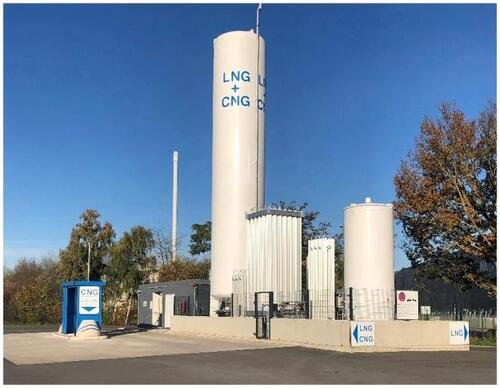
Cryogenic engineering is a field that deals with the design, construction, and optimization of systems that operate at exceptionally low temperatures. In industries where liquid gases are stored, transported, or vaporized, cryogenic engineering forms the technical basis for safe and reliable processes. Materials can behave differently at cryogenic temperatures, so it is important that each system is approached/treated with precision. Only with a well-thought-out approach can cryogenic installations operate efficiently and safely.
Cryogenic engineering is an indispensable link within the industrial sector. Systems for liquid gases such as nitrogen, oxygen, argon, hydrogen, or LNG depend on stable and controlled conditions. Cryogenic engineering makes it possible to keep these liquid gases in good condition during transport, for example. Thermodynamic insights and materials science also play a major role in this. The combination of knowledge areas makes cryogenic engineering a difficult and highly specific field.
Cryogenic engineering is increasingly being used in various sectors. It is an essential component in the energy sector, due to the installations for LNG and hydrogen. In the medical world, the technology supports cryopreservation and cooling systems, among other things. Cryogenic engineering is also indispensable in scientific sectors, for example in laboratories where it is used for experiments requiring temperatures well below zero. In all these applications, cryogenic engineering provides a stable, safe basis for processes that must perform under extreme conditions.
Applications of cryogenic engineering in modern industries
Cryogenic engineering plays a major role in LNG storage facilities, hydrogen infrastructures, and industrial gas systems. In the energy sector, this mainly involves the controlled storage and vaporization of these liquid energy carriers. The accuracy offered by cryogenic engineering enables companies to work efficiently with substances that only remain liquid at very low temperatures.
But this field goes even further. In the medical sector, cryogenic techniques are used for biological storage and specialized cooling systems that require absolute stability, among other things. Research institutions rely on cryogenic engineering for experiments where temperature differences are not permitted. Thanks to the robustness and predictability of cryogenic systems, the quality of research results remains high.
In addition to the medical sector, the industrial sector also makes extensive use of cryogenic engineering. They do this mainly in processes such as metalworking, welding, chemical production, and/or food processing. They do this to create accurate and safe working conditions. The versatility of cryogenic engineering makes it a field with broad applicability.
Key features
Cryogenic engineering requires in-depth expertise and a sound approach. Installations must be able to withstand extreme temperature differences, pressure variations, and unwanted evaporation. That is why cryogenic engineering combines insights from thermodynamics, materials science, and safety engineering, among other disciplines.
Important elements include:
- High-quality insulation design that minimizes heat radiation
- Materials that remain reliable at cryogenic temperatures
- Safe and controlled pressure management
- Efficient storage and evaporation systems
- Strict safety and maintenance procedures
By carefully integrating these aspects, you get an installation that can function reliably, stably, and safely for a long time.
The future-oriented value of cryogenic engineering
Cryogenic engineering makes a direct contribution to energy transition. LNG applications, hydrogen solutions, and cryogenic infrastructures are scalable and sustainable. The technology offers safety, reliability, and efficiency in processes where liquid energy carriers play an increasingly important role.
In addition, cryogenic engineering supports high-tech environments in which accuracy and stability are essential. As the field continues to evolve, increasingly advanced systems are becoming available that meet higher capacity and safety requirements. Cryogenic engineering thus remains a foundation for innovation, both now and in the future.